

SWOT &
STRATEGY
A diverse portfolio of beauty brands
e.l.f. Beauty has expanded beyond cosmetics and now owns several brands, including e.l.f. Cosmetics, e.l.f. SKIN, Naturium, Well People, and Rhode. This allows the company to reach consumers with different beauty interests, product needs, and budgets, while giving each brand its own identity and audience.
Why this is a strength
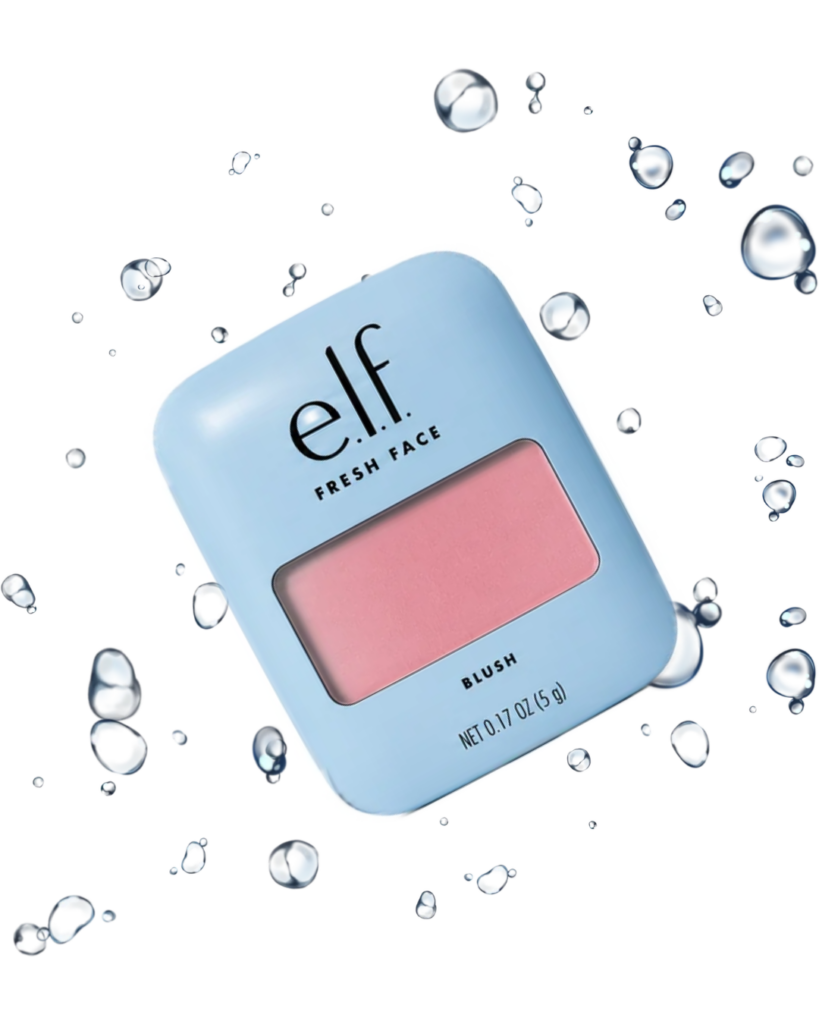
A diverse portfolio reduces e.l.f.’s dependence on one product category or audience. All five brands reported growth in FY2026. This also benefits Fresh Face by providing an established foundation in both skincare and cosmetics.
Affordability
e.l.f. has built its business around offering beauty products at accessible prices. For example, its Power Grip Primer sells for approximately $11, compared with a similar prestige product priced around $38. This helps e.l.f. attract consumers who want quality beauty products without paying luxury prices.
Why this is a strength
Affordable pricing makes e.l.f. appealing to budget-conscious younger consumers and gives Fresh Face an opportunity to reach Gen Z shoppers looking for everyday makeup that fits their budget without sacrificing quality.
Strong marketing and customer engagement
e.l.f. uses social media, influencer partnerships, and online campaigns to connect with consumers. Its marketing reaches audiences across platforms such as TikTok, Instagram, YouTube, Snapchat, and Twitch. The company also invests heavily in marketing and digital activities, spending approximately $399.8 million in FY2026.
Why this is a strength
e.l.f.’s strong digital presence gives Fresh Face an opportunity to reach younger consumers where they already spend their time. Through social media and influencer partnerships, the brand can show how Fresh Face fits into everyday makeup routines and encourage consumers to share their own looks. This also allows e.l.f. to build on current beauty conversations and promote the idea that makeup should enhance your natural features rather than change how you look.
Continued sales growth and expansion
e.l.f. reported approximately $1.64 billion in net sales during FY2026, a 25% increase from the previous year. The company continued this growth into FY2027, reporting a 36% increase in net sales during its first quarter, reaching approximately $479.4 million.
Why this is a strength
e.l.f.’s continued sales growth shows that the company has a strong customer base and is continuing to attract new consumers. This gives Fresh Face an opportunity to build on the brand’s existing success and reach an even larger audience.
Sales growth ≠ profitability
Although e.l.f.’s sales increased by 25% in FY2026, its net income fell from approximately $112 million in FY2025 to $26 million in FY2026. The company also reported a slight decrease in gross margin, partly due to higher tariffs and other business costs.
Why this is a weakness
Growing sales does not necessarily mean a company is becoming more profitable. e.l.f. is spending heavily on marketing, distribution, acquisitions, and business expansion. If these costs continue to increase, the company may find it harder to maintain its profits while growing at the same pace.
Reliance on major retailers
A large portion of e.l.f.’s sales comes from a few major retailers. During FY2026, Target accounted for 18% of net sales, Walmart 13%, Amazon 11%, and Sephora 10%. Together, these four customers represented approximately 52% of the company’s net sales.
Why this is a weakness
Relying on a small number of retailers makes e.l.f. more vulnerable to changes in those retailers’ business decisions. If a major retailer reduces shelf space, changes its purchasing plans, or ends a partnership, e.l.f. could lose a significant source of revenue. This makes it important for the company to continue developing its own e-commerce business and other sales channels.
Dependence on overseas manufacturing
e.l.f. relies on third-party manufacturers and suppliers, with the majority of its products sourced from China. While they do have a broad supplier base and additional manufacturing capabilities, it still exposes the business to international trade issues (very relevant in this political climate), shipping delays, and changes in manufacturing costs.
Why this is a weakness
Disruptions or rising costs could affect product availability and make it more difficult to maintain the affordable prices that are central to its business model.
Multiple Brand Identities
e.l.f.’s acquisitions of other brands bring new opportunities, but also challenges. For example, the company has determined that keeping key Rhode employees and maintaining Hailey Bieber’s involvement is important to the brand’s success.
Why this is a weakness
Consumers may be loyal to a brand because of its original image, leadership, and personality. If these change after an acquisition, the brand could lose some of the qualities that attracted customers in the first place. e.l.f. must find a balance between growing its business and keeping each brand’s identity intact.
Flexible and more personal beauty routines
Younger consumers are showing interest in beauty products that fit their everyday routines and personal preferences. According to YPulse’s 2026 Personal Care and Beauty Shopping Report, younger consumers are keeping their beauty routines relatively simple, even as social media promotes more complicated routines. The report also highlights their interest in affordable, everyday beauty products.
Why this is an opportunity
This gives e.l.f. an opportunity to position Fresh Face as an easy, everyday makeup option. The campaign can show that makeup does not have to mean a full routine or a completely different look. Consumers can choose how much or how little they want to wear, while still feeling like themselves.
Reach consumers through social media
Social media continues to influence how consumers discover beauty products. Tinuiti’s 2025 Beauty Marketing Study found that 62% of Gen Z beauty shoppers had discovered a beauty product on social media that they later purchased within the past year.
Why this is an opportunity
e.l.f. already has experience creating digital campaigns and connecting with younger audiences. It can build on this strength by creating more useful product demonstrations, creator partnerships, and interactive content that helps consumers understand how products fit into their routines. Social media can also help turn product discovery into actual purchases.
Demand for affordable beauty products
The affordable beauty market continues to show growth. Circana reported that U.S. mass beauty sales increased by 5% in 2025, reaching $72.7 billion, while unit sales increased by 2%.
Why this is an opportunity
This supports e.l.f.’s existing business model and creates room for the company to reach more consumers who are looking for products that fit their budgets. e.l.f. can continue introducing products at accessible prices while showing consumers that affordability does not have to mean sacrificing product performance.
Growing use of AI
Beauty shoppers are beginning to use new digital tools to research products and make purchasing decisions. Tinuiti’s 2026 Beauty Marketing Study found that 38% of surveyed U.S. beauty shoppers had used AI for beauty research or purchases.
Why this is an opportunity
e.l.f. can explore ways to make online shopping more helpful and personalized. This could include improving product information, creating content that answers common consumer questions, and exploring digital tools that help shoppers compare products. They need to optimise not only for SEO but GEO (generative engine optimization) as well.
Increasing competition
The beauty market is highly competitive, with established companies and newer brands with celebrity-backed businesses all competing for consumers’ attention. Consumers also have more choices than ever, making it easier to switch between brands based on price, product performance, and convenience.
Why this is a threat
e.l.f. cannot rely only on its brand recognition or affordable prices to keep customers. It needs to continue showing consumers why its products are worth purchasing.
Rising costs and changing trade policies
Changes in tariffs and international trade policies can increase the cost of manufacturing and importing products. e.l.f. reported that tariffs affected its gross margin during FY2026 and that it paid approximately $58.5 million in IEEPA-related tariffs during the year.
Why this is a threat
Higher costs could make it harder for e.l.f. to maintain its affordable pricing while also trying to make a profit. The company may need to absorb some of these costs or increase prices, which could affect its appeal to budget-conscious consumers.
Rapid changes in trends
Beauty trends can change quickly, especially on platforms such as TikTok and Instagram. A product or campaign that receives attention today may lose popularity as new trends emerge.
Why this is a threat
e.l.f. uses digital marketing to reach consumers, so changes in platform algorithms or audience interests could affect the company’s ability to reach people. The company must keep adapting its marketing while making sure its brand identity is not built entirely around short-lived trends.
Show consumers the value behind e.l.f. products
Affordable pricing is one of e.l.f.’s biggest strengths, but the company faces competition from both drugstore and higher-end beauty brands. e.l.f. should continue showing consumers that its products offer quality and performance at an accessible price. Through product demonstrations, influencer reviews, and customer testimonials, the company can help consumers understand what makes its products worth buying. This can also support Fresh Face by showing how affordable products can fit into simple, everyday makeup routines.
Success Metrics
- Maintain an average product rating of at least 4.5 out of 5.
- Increase visits to product pages by 15% within six months.
- Track positive consumer feedback about product quality and performance.
Position Fresh Face around individuality and personal choice
Fresh Face gives e.l.f. an opportunity to connect with younger consumers through a diverse range of women, including Gen Z students, young professionals, and women from different backgrounds and lifestyles. The campaign should feature different makeup preferences, from minimal everyday looks to full glam, showing that there is no single way to define beauty. Through social media and influencer partnerships, Fresh Face can reinforce this message while encouraging consumers to share their own interpretations of the campaign.
Success Metrics
- Reach at least 5 million target consumers through campaign advertising and social media.
- Increase social media engagement by 15% compared with a previous e.l.f. campaign.
- Track positive audience feedback and sentiment around the campaign’s message of individuality and personal choice.
Grow direct relationships with consumers
More than half of e.l.f.’s net sales come from four major retailers, making the company dependent on a relatively small number of sales partners. Although retailers and social media are important for reaching consumers, e.l.f. should continue investing in its own website, email marketing, and other direct communication channels. This would give the company more control over how it reaches customers, promotes repeat purchases, and provides a better understanding of consumer preferences.
Success Metrics
- Increase direct-to-consumer website sales by 10% within one year.
- Increase repeat purchases through e.l.f.’s website.
- Track website traffic and purchases generated through email, search, and other non-social media channels.
Note: The numerical success metrics above are proposed campaign and business targets, not existing e.l.f. performance figures.
Disclaimer: This project was created solely for academic purposes. The brand(s) referenced were used as part of a class assignment, and this work is not affiliated with, endorsed by, or produced in collaboration with the company.